
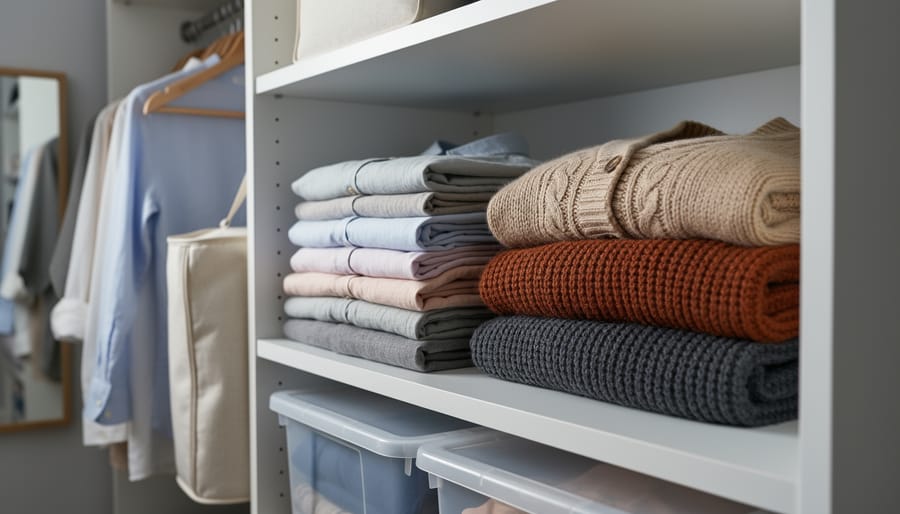
Most of us switch our wardrobes twice a year, typically in late March or early April for spring/summer and late September or early October for fall/winter. But here’s what really matters: your local climate and lifestyle will shift those windows by weeks or even months, which is why someone in Miami and someone in Montreal follow completely different timelines even though the fashion industry pretends we all live in the same four seasons.
The traditional fashion calendar was built around temperate climates and retail cycles, not your actual weather. Spring collections hit stores in February when it’s still freezing in much of the Northern Hemisphere. Fall pieces arrive in August while we’re sweating through heatwaves. This disconnect between “fashion seasons” and “weather seasons” confuses everyone, from beginners wondering why stores are selling wool coats in summer to enthusiasts trying to plan capsule wardrobes around unpredictable temperature swings.
Understanding clothing seasons means learning to separate industry timing from your personal needs. You’re not switching your closet because a calendar tells you to. You’re responding to temperature patterns, your daily routine, and how your body regulates heat. A teacher who works outdoors for recess duty will transition differently than someone in a climate-controlled office, even if they live on the same street.
What Are Clothing Seasons? (Quick Answer)
Clothing seasons are industry-defined periods that govern when fashion brands design, produce, and sell specific types of garments. Unlike calendar seasons that start on fixed dates, fashion seasons run on a commercial cycle built around when people actually shop for and wear different clothing weights and styles.
The fashion industry traditionally operates on four main seasons: Spring, Summer, Fall, and Winter. Spring lines arrive in stores from January through March, featuring lighter fabrics and transitional pieces. Summer collections hit retail floors from late April through July, focusing entirely on warm-weather wear. Fall merchandise launches from July through September, introducing knitwear and layering options. Winter stock appears from October through December, showcasing the heaviest coats, boots, and cold-weather essentials.
This timeline runs roughly three to six months ahead of when you’ll actually wear those clothes in most climates. Brands introduce winter coats while you’re still sweating through August because they need lead time for production, shipping, and merchandising. It’s also why seasonal sales happen when items feel most relevant to your wardrobe, retailers need to clear inventory before the next season’s goods arrive.
- Pre-Spring
- Lightweight collections released in early January to bridge the gap between winter and full spring lines, featuring pieces you can layer over cold-weather basics.
- Resort or Cruise
- Special collections designed for warm-weather getaways and Southern Hemisphere summer, typically launching in November and December when Northern shoppers plan tropical vacations.
- Transitional Pieces
- Versatile garments like trench coats, light knits, and denim jackets that work across multiple seasons and don’t require full wardrobe swaps.
- Capsule Season
- Mini-collections or limited drops released between major seasons, often tied to specific trends or collaborations rather than weather needs.
Understanding these cycles helps you time purchases strategically and explains why stores seem perpetually out of sync with actual weather patterns outside your window.
When to Make Your Seasonal Wardrobe Switch
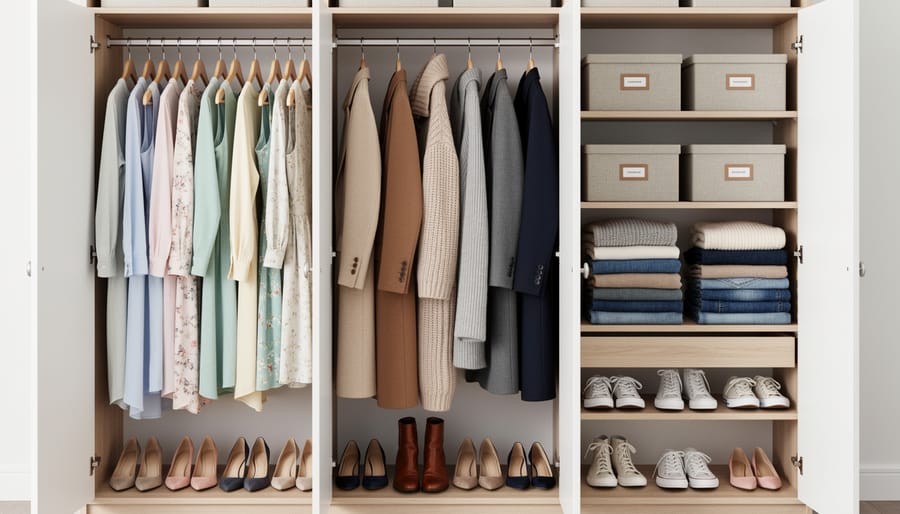
Spring Transition (Lightweight Layers)
For most Northern Hemisphere dwellers, the spring transition window opens between late February and early April, though your specific start date depends more on consistent daytime temperatures than calendar squares. When highs reliably hit 50-60°F (10-15°C) for several consecutive days, that’s your signal to begin integrating lighter layers.
Start by swapping heavy wool coats for transitional jackets, think trench coats, denim jackets, or unlined blazers that work over long sleeves. These bridge pieces handle morning chill without causing afternoon overheating. Next, rotate in lightweight knits and long-sleeve cotton tops while keeping one or two winter sweaters accessible for unexpected cold snaps.
Your heaviest items can go into storage first: parkas, insulated boots, thermal base layers, and chunky cable knits. But hold onto at least one warm coat and a few mid-weight sweaters until you’ve seen two full weeks of mild weather. Spring is notoriously unpredictable, and pulling items back out of storage boxes gets old fast.
The Southern Hemisphere follows this same pattern six months shifted, with transitions typically beginning in late August through October.
Summer Switch (Full Warm-Weather Mode)
Summer represents the most polarized fashion season, what works in Phoenix won’t survive in Seattle, and coastal humidity demands different choices than desert heat. The traditional summer switch happens from late May through mid-June in the Northern Hemisphere, but this timeline shifts dramatically based on your microclimate.
Unlike spring’s gradual transition, summer often arrives abruptly. One week you need a cardigan; the next, even short sleeves feel oppressive. This is when you fully retire sweaters, pack away boots, and commit to breathable fabrics like linen, cotton, and moisture-wicking blends.
The Regional Reality
Mediterranean climates can justify summer wardrobes from April through October. Tropical regions essentially live in perpetual summer mode with minimal seasonal variation. Meanwhile, northern areas or high-elevation cities might only need true summer pieces for six to eight weeks, making a full wardrobe overhaul impractical.
Watch for three consecutive days above 75°F as your personal trigger point. If you’re reaching for tank tops before breakfast and ditching layers by 9 AM, your summer switch is overdue. Store cold-weather items where they’re still accessible, summer evenings and over-air-conditioned spaces often demand that emergency cardigan.
Fall Transition (The Layering Season)

Fall wardrobes typically emerge between mid-September and late October in the Northern Hemisphere (March to May in the Southern Hemisphere), but this transition stretches longer than any other seasonal shift. The extended window exists because fall weather fluctuates dramatically, morning frost followed by afternoon warmth creates genuine layering needs rather than simple outfit swaps.
Start introducing lightweight knitwear, ankle boots, and transitional jackets when nighttime temperatures consistently drop below 15°C (59°F), even if days remain warm. This approach mirrors backstage layering techniques where professionals prepare for rapid temperature changes. Keep summer pieces accessible during early fall, you’ll alternate between sandals and boots for weeks.
Mid-fall calls for heavier knits, wool trousers, and closed-toe footwear as daily highs settle into the 10-15°C (50-59°F) range. Reserve your heaviest fall items (chunky cardigans, lined coats) for late in the season when temperatures approach winter thresholds. In temperate climates, this gradual progression can span twelve weeks, making fall the season where strategic layering matters most. Your exact timing depends on whether your region experiences a crisp, defined autumn or a gradual cool-down.
Winter Arrival (Cold-Weather Essentials)
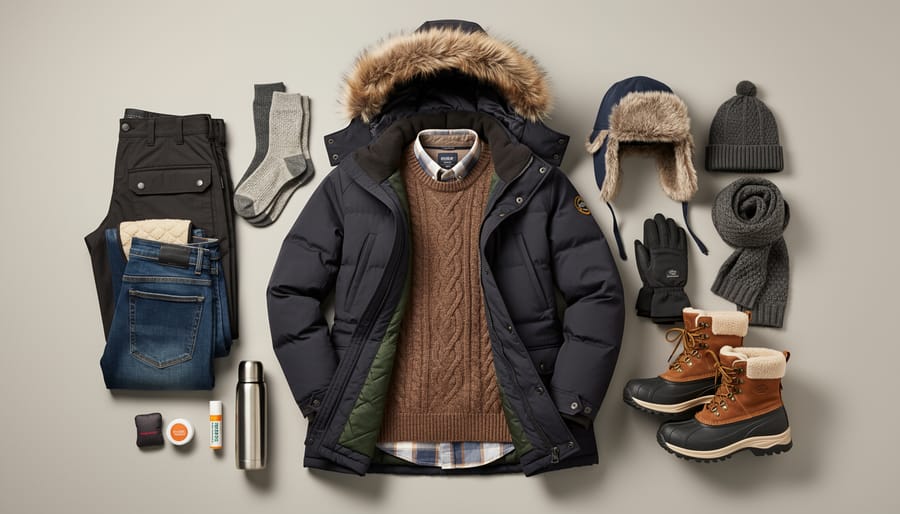
Most regions need their full winter wardrobe ready between mid-November and early December, though your specific climate dictates the urgency. In temperate zones with true cold seasons, this means having heavy coats, insulated boots, thick knitwear, and thermal layers fully accessible by Thanksgiving in the Northern Hemisphere.
Mild winter climates, think Southern California, Florida, or Mediterranean regions, may never require a complete winter swap. A few medium-weight sweaters and a versatile jacket often suffice, with the “transition” happening around late December when evening temperatures finally drop consistently.
Extreme cold climates operate on an earlier timeline. Northern Canadian provinces, Scandinavian countries, and high-altitude regions often deploy winter essentials by late October or early November, when first snowfall arrives. These wardrobes include expedition-weight outerwear, moisture-wicking base layers, and serious weatherproofing that mild-climate residents never need.
The key marker for full winter mode isn’t a date, it’s when you can no longer comfortably layer your fall pieces for warmth. Once your wool coat and cashmere scarf combo stops cutting it for your morning routine, your heavy artillery needs to be accessible, not buried in storage.
Factors That Shift Your Timing
Climate and Geography
Your ZIP code matters more than the calendar when it comes to seasonal wardrobe switches. A spring transition in Phoenix happens in late February, while Boston residents might not pack away heavy coats until mid-April. This isn’t just about north versus south, it’s about microclimates that create wildly different needs within the same region.
Coastal areas experience moderated temperatures year-round. San Francisco residents famously need jackets in July, while inland California towns hit triple digits. The ocean acts as a thermal buffer, keeping summers cooler and winters milder than locations just fifty miles inland.
Elevation changes everything. Denver sits at 5,280 feet, where summer mornings can dip into the forties before afternoon heat arrives. Mountain communities might see snow in June while valleys below bloom with summer flowers.
Regional weather patterns ignore fashion season rules entirely. The Pacific Northwest’s rainy season runs October through May, requiring waterproof layers long after stores stock spring dresses. Southern states skip fall altogether, jumping from air-conditioned summer to mild winter with a brief layering window in between.
Track your local weather patterns for three weeks, not retail calendars, to nail your timing.
Your Lifestyle and Daily Routine
Your work environment dictates wardrobe timing as much as the calendar does. Someone who spends eight hours in a climate-controlled office can delay their winter transition weeks longer than a construction worker or postal carrier exposed to the elements all day. Indoor workers often maintain lighter clothing deeper into autumn because they’re only outside during brief commutes, while outdoor professionals need full cold-weather gear the moment temperatures drop.
Your commute type shifts timing too. A ten-minute car ride to work lets you postpone heavy coats compared to someone walking twenty minutes or waiting at outdoor transit stops. City dwellers using public transport typically transition earlier than suburban drivers, simply because standing platforms and walking between connections expose you to weather far longer.
Your social calendar matters more than most people realize. If you attend outdoor fall weddings, sports events, or evening gatherings, you’ll need transitional pieces available earlier than someone whose social life happens mostly indoors. Parents with kids in outdoor activities can’t pack away practical layers as quickly as childfree professionals might. Consider your actual weekly routine when deciding what stays accessible.
Personal Comfort and Body Regulation
Some people reach for a sweater when the thermometer hits 70°F, while others are still comfortable in short sleeves at 55°F. This isn’t stubbornness, it’s biology. Your personal thermoregulation, influenced by metabolism, body composition, hormonal fluctuations, and even medication, matters more than any seasonal calendar date.
If you consistently feel colder than those around you, don’t wait until the “official” fall transition to pull out warmer layers. Conversely, if you run warm, there’s zero shame in keeping lighter fabrics accessible well into what others consider coat season. Trust your body’s signals over what fashion timelines suggest you should be wearing. The goal of seasonal dressing is comfort and function, not conforming to arbitrary switching dates that don’t match your physiology.
Fashion Calendar vs. Weather Reality
Retailers roll out fall collections in July and spring lines in January, a disconnect that frustrates shoppers staring at wool coats during August heat waves. Fashion’s production schedules run 6-9 months ahead of actual wear dates, driven by manufacturing timelines, wholesale buying cycles, and brands’ need to capture early-season demand. This misalignment creates opportunity: late-summer markdowns on transitional pieces you’ll actually wear in September, or February clearance on winter staples perfect for March’s cold snaps. Shop one season behind the racks when prices drop, and stock up on next year’s seasonal basics during end-of-season sales. Ignore store displays as weather indicators, check your local forecast instead, and buy what you’ll genuinely wear within the next 4-6 weeks.
How to Actually Execute Your Seasonal Swap
The seasonal wardrobe swap doesn’t have to mean spending an entire weekend buried in clothes. Most people can complete a thorough transition in two to three hours using a streamlined approach.
Start by pulling everything out of one category at a time rather than emptying your entire closet at once. Begin with the most obviously seasonal items (heavy winter coats or summer tank tops) and work toward the versatile middle ground pieces last. This prevents the paralyzing pile of clothes that makes many people abandon the project halfway through.
- Remove all clearly off-season pieces from your closet and drawers, placing them in a central sorting area like your bed.
- Try on anything you’re uncertain about keeping. If you didn’t wear it once this past season and can’t identify a specific upcoming occasion for it, consider donating it rather than storing it.
- Clean everything before storage. Stains set over months in storage, and even invisible body oils attract fabric-damaging insects.
- Pack items in breathable storage containers or garment bags, avoiding plastic bags that trap moisture. Add cedar blocks or lavender sachets for natural pest prevention.
- Bring out your incoming season’s stored items, inspect them for any needed repairs or cleaning, and hang or fold them into your now-spacious closet.
- Create a “transition zone” in your closet or on a chair where you keep three to five versatile layering pieces accessible for unpredictable weather days.
The capsule approach works particularly well during transitions. Rather than swapping your entire wardrobe on a single day, gradually rotate items over two to three weeks as weather patterns become clear. Keep a small capsule of 15-20 core pieces for the incoming season front and center, adding more as temperatures stabilize.
Store off-season items in labeled containers by category (workwear, casual, occasion-specific) rather than mixing everything together. This makes it infinitely easier to retrieve that one summer dress for an unexpected warm day in October or locate your winter coat when an early cold snap arrives. Under-bed storage works for most people’s volume, while overhead closet shelves or spare room corners accommodate larger seasonal wardrobes.
The key is accepting that your first pass won’t be perfect. You’ll inevitably retrieve a stored item or pack away something you need again. That’s normal, not failure.
Behind the Scenes: How Fashion Brands Time Their Seasons
The fashion industry operates on a six-month lead calendar that constantly clashes with consumer reality. Designers and brands develop collections a full season ahead, showing Fall/Winter pieces on runways in February and Spring/Summer in September. This explains why you’ll find puffer jackets hitting stores in late July when it’s 90 degrees outside, and linen shorts appearing in January while you’re still bundling up.
This timing stems from the wholesale buying cycle. Retailers place orders at trade shows and showrooms months before items hit floors, needing enough lead time for production, shipping, and merchandising. What looks like absurd timing actually reflects supply chain logistics. The same principles that drive runway backstage prep apply to retail scheduling: everything happens earlier than the public sees.
This disconnect creates opportunities for shoppers who understand the rhythm. Buy winter coats in late winter when stores desperately clear inventory to make room for spring deliveries. Snag swimwear in late summer as retailers pivot to fall merchandise. You’ll find the deepest discounts when the fashion calendar and weather calendar are most misaligned.
The global nature of fashion adds another layer. A single brand often releases the same collection worldwide despite opposite seasons in different hemispheres, meaning Australian shoppers see wool coats arrive in their summer. Understanding these fashion timing insights transforms how you shop. Rather than fighting the industry calendar, use it strategically. The wardrobe transition you need today might be marked down tomorrow because stores already moved on to next season’s season-ready styling.
Maintaining Your Seasonal Wardrobe Year-Round
Storing off-season clothes isn’t just about shoving them in a bin under the bed. How you maintain your wardrobe during storage months directly affects whether those pieces will actually be wearable when their season returns, or if you’ll pull them out to discover moths, mildew, or mystery stains that have set permanently.
Start with a proper clean. Everything going into storage should be freshly laundered or dry-cleaned, even items that “look fine.” Body oils, deodorant residue, and invisible stains oxidize over months in darkness, turning into permanent yellow marks. For delicate knits, consider hand-washing rather than dry-cleaning chemicals that can weaken fibers during extended storage. Let everything air-dry completely before packing; any residual dampness invites mildew.
Choose your storage method by fabric type. Natural fibers like wool, cashmere, and silk need breathable containers, cotton storage bags or acid-free tissue paper in breathable bins. These materials must be protected from moths, so add cedar blocks or lavender sachets (never mothballs directly on fabric). Synthetic fabrics and denim can handle sealed plastic bins, which actually protect them from dust and moisture. Avoid storing anything on wire hangers; they create shoulder dimples and rust spots.
Location matters more than you’d think. Attics get too hot and cook fabrics, causing yellowing and fiber breakdown. Basements get too damp, promoting mildew. The ideal spot stays relatively stable in temperature and humidity, under the bed, in a closet, or in climate-controlled storage if you have it. Keep storage containers off the floor to avoid moisture wicking and pest access.
Schedule quarterly storage checks, even if it feels excessive. Pull out your bins every three months, open them in good light, and look for problems: musty smells, tiny holes, discoloration, or that tell-tale cashmere “fuzz” that signals moth larvae. Catching an issue in month two beats discovering a ruined sweater collection in month six. Refold items differently each check to prevent permanent creases along the same lines.
Keep a transitional capsule accessible year-round. Climate unpredictability means you’ll need that lightweight cardigan in December or those ankle boots in May. Don’t bury these workhorses in storage. Designate a small section of your active closet for layering pieces that work across multiple seasons, they’re your insurance against weather that doesn’t read the calendar.
Common Questions About Clothing Seasons
The shift between clothing seasons raises plenty of practical questions, especially as climate patterns become less predictable and personal wardrobes trend toward minimalism. Here are answers to the most common concerns about navigating seasonal transitions.
What should I do when the weather doesn’t match the season?
Keep a small selection of transitional pieces accessible year-round, a light jacket, one pair of closed-toe shoes, and a cardigan can bridge unexpected temperature drops in summer. Check the weekly forecast rather than the calendar, and don’t feel pressured to pack away everything the moment a new season technically arrives.
How do I handle seasonal transitions with a minimal wardrobe?
Focus on versatile, layerable pieces that work across multiple seasons rather than extreme seasonal specifics. A capsule built around neutral layers, breathable fabrics, and adaptable silhouettes means you’re swapping accessories and outerwear rather than your entire closet, which naturally simplifies the transition process.
Do clothing seasons apply if I live in a tropical climate?
Traditional four-season frameworks don’t translate well to year-round warm climates, but you can still organize by rainy versus dry seasons or adjust fabric weights between hot and slightly cooler months. The concept matters more for travelers from tropical regions visiting temperate zones, where understanding seasonal timing helps with packing appropriate layers.
How should I pack when traveling across different seasons?
Research your destination’s actual weather patterns for your travel dates rather than assuming hemisphere or calendar season, then build outfits around one or two versatile base layers that work in both climates. Wear your bulkiest items during travel to save luggage space, and plan to do laundry if you’re crossing from winter to summer or vice versa for extended trips.
Beyond these common scenarios, many fashion enthusiasts wonder whether climate change is making traditional seasonal wardrobes obsolete. The short answer is that seasons are becoming less predictable rather than disappearing entirely, which actually makes understanding timing principles more valuable, not less. When you know the factors that should trigger a wardrobe shift, you can respond to what’s actually happening outside your window instead of blindly following dates.
The rise of trans-seasonal dressing, wearing pieces that aren’t locked to one specific season, reflects both environmental unpredictability and evolving fashion attitudes. A linen blazer, slip dress, or lightweight trench can move through multiple seasons with strategic layering, reducing the pressure to own and store distinct warm-weather and cold-weather versions of everything. This approach doesn’t eliminate seasonal transitions entirely, but it does make them more gradual and less all-or-nothing.
For those building a year-round capsule wardrobe, the key is identifying which pieces genuinely need seasonal versions versus which can adapt. You likely need season-specific outerwear and footwear, but your core tops, bottoms, and accessories can often transcend strict seasonal boundaries with thoughtful fabric choices and styling flexibility.
Your seasonal wardrobe transitions should work for you, not the other way around. There’s no universal date when everyone must swap their winter coats for spring jackets or pack away summer dresses. The most successful approach is the one that responds to your actual weather, your daily comfort needs, and your lifestyle realities.
If you live somewhere with unpredictable springs, keeping layering pieces accessible makes more sense than a dramatic one-day closet overhaul. If you run cold, holding onto that favourite cardigan well into summer isn’t breaking any rules. The fashion industry operates on its own calendar, but your wardrobe operates on yours.
Think of seasonal adjustments as ongoing, gentle shifts rather than rigid switchovers. Pay attention to what you’re reaching for repeatedly, what stays untouched, and what you wish you had on hand. Those signals matter more than any prescribed timeline.
The goal isn’t perfect seasonal organization. It’s having the right pieces available when you need them, stored properly when you don’t, and enough flexibility built in to handle whatever weather your region throws at you. Trust your instincts, dress for your reality, and let that guide your timing.