
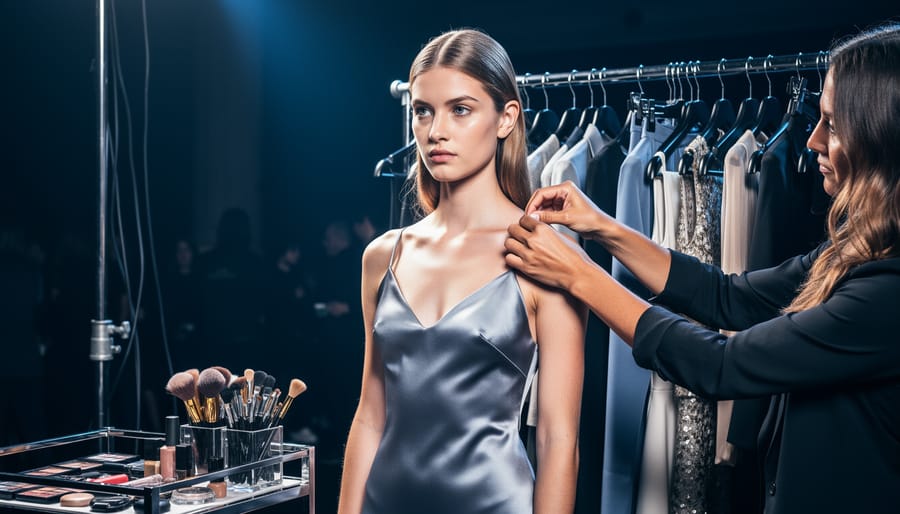
New York Fashion Week Spring-Summer 2027 takes place September 10-15, 2026, with 70 runway shows and designer presentations spanning iconic venues from Gotham Hall in Manhattan to Sony Hall. This six-day showcase isn’t just about the clothes that walk the runway; it’s about the controlled chaos, creative collaboration, and split-second decisions happening in the wings that transform a designer’s vision into a live moment.
This year’s schedule offers more than front-row glamour. For fashion enthusiasts curious about how a collection actually comes together under pressure, NYFW 2026 presents a rare window into production realities. From the lighting cues that shift a garment’s mood to the backstage choreography that keeps 30 models moving in sequence, understanding these mechanics deepens your appreciation for every piece that appears on the catwalk.
Whether you’re planning to attend in person at venues like Gotham Hall from September 11-13 or following along remotely, grasping the behind-the-scenes framework helps you see beyond the surface. You’ll notice how makeup artists adapt looks mid-show when a designer pivots, how stylists solve last-minute fit challenges, and why certain fabrics photograph differently under runway spots versus natural light.
The spring-summer 2027 collections launching this September carry forward threads from past decades while responding to today’s conversations about sustainability, craftsmanship, and cultural storytelling. Knowing what happens backstage, from sample fittings weeks earlier to the final tech rehearsal hours before showtime, gives you the full story of how fashion actually gets made at this scale.
NYFW 2026 at a Glance: Dates, Locations & What’s Different This Year
New York Fashion Week Spring-Summer 2027 runs from Thursday, September 10, through Tuesday, September 15, 2026. The Official NYFW dates mark the industry’s return to a concentrated six-day showcase, with the preliminary schedule featuring 70 runway shows and designer presentations across Manhattan. This represents a slightly leaner lineup compared to previous years, reflecting the industry’s ongoing shift toward quality over quantity in presentation formats.
Venue selections highlight both accessibility and production scale this season. Gotham Hall in Manhattan hosts ticketed presentations from September 11-13, offering a centralized hub for multiple showcases under one roof. Sony Hall serves as another key venue, providing the technical infrastructure needed for larger productions that demand sophisticated lighting, sound, and seating configurations. These established spaces allow production teams to work with familiar layouts while accommodating the backstage coordination required for rapid show turnarounds.
The bridal segment gets its own spotlight during NYFW Bridal October dates, scheduled for October 13-15, 2026. This separate three-day window gives bridal designers dedicated runway time without competing for attention during the main fashion week rush. The split calendar acknowledges bridal fashion’s distinct buying cycle and audience, allowing retailers and press to focus exclusively on wedding collections.
What stands out this year is the tighter timeline paired with strategic venue choices. Six concentrated days mean every show carries more weight, and the emphasis on established venues suggests organizers are prioritizing production efficiency and attendee experience over sprawling, decentralized presentations across the city.
Iconic Fashion Reinterpretations Taking the Runway
Why Designers Are Revisiting the Archives
Archive mining has become a defining creative strategy in contemporary fashion, driven by forces far more complex than simple nostalgia. Designers are returning to heritage collections and iconic past moments because they offer a proven visual language that resonates across generations, while also providing a more sustainable alternative to constant novelty. Reinterpreting existing silhouettes and motifs reduces the pressure to invent from scratch each season, allowing creative teams to focus resources on craftsmanship, fit refinement, and material innovation rather than chasing trend cycles.
This approach also reflects shifting consumer values. Younger fashion audiences increasingly seek pieces with cultural weight and narrative depth, not just newness. A reinterpreted archive piece carries inherent storytelling, connecting wearers to fashion history while feeling relevant to current aesthetics. It’s a form of visual remix culture that mirrors how music and art have long worked with sampling and recontextualization.
Crucially, this differs from retro revival in intent and execution. Retro copies a past aesthetic wholesale, often as trend-driven pastiche. Archive reinterpretation extracts the underlying design principle, the construction method, or the cultural resonance of a piece and rebuilds it through a contemporary lens. You might see a 1990s slip dress silhouette reimagined in technical fabrics with modern draping, or heritage tweed reworked into deconstructed streetwear. The original becomes a springboard, not a template to replicate.
What to Watch For on the Runways
Expect to see ’90s minimalism resurrected with a twist, think slip dresses layered over tailored trousers, or clean-lined blazers in unexpected fabrications like organza or technical mesh. Designers are stripping down the decade’s sleek silhouettes and rebuilding them with materials that didn’t exist in the original era, creating familiar shapes that feel entirely new.
The collision of couture techniques and streetwear continues to evolve beyond simple logo hoodies paired with evening skirts. Watch for hand-embroidered bomber jackets, sneakers constructed with traditional shoemaking methods reserved for heels, and tracksuits cut with the precision of Savile Row tailoring. This fusion respects both worlds equally rather than treating one as a novelty accent.
Heritage textiles get the most literal reinterpretation treatment. Designers are pulling archive fabrics, vintage tweeds, deadstock Liberty prints, family textile collections, and cutting them into contemporary silhouettes that would never have existed when the fabric was originally woven. A 1960s brocade becomes a modern jumpsuit. Victorian lace structures an architectural coat. The result honors craft traditions while refusing to recreate the past exactly as it was.
Behind the Scenes: How Fashion Week Really Works
The Timeline: From Concept to Catwalk
The runway show you’ll see on September 10 is the culmination of six to nine months of intense creative and logistical work. Most designers start sketching initial concepts for Spring-Summer 2027 as early as January 2026, right after Fall shows wrap. Those early mood boards and silhouette studies gradually evolve into technical drawings, then first muslin prototypes by late spring.
By June and July, pattern-makers refine those samples while fabric sourcing ramps up. This is when heritage textiles get selected, when that archive piece you’ll see reinterpreted gets carefully studied for construction details. Sample garments go through multiple fittings on fit models, adjustments made for drape, proportion, and movement. Each look that walks the runway represents dozens of hours of hands-on development.
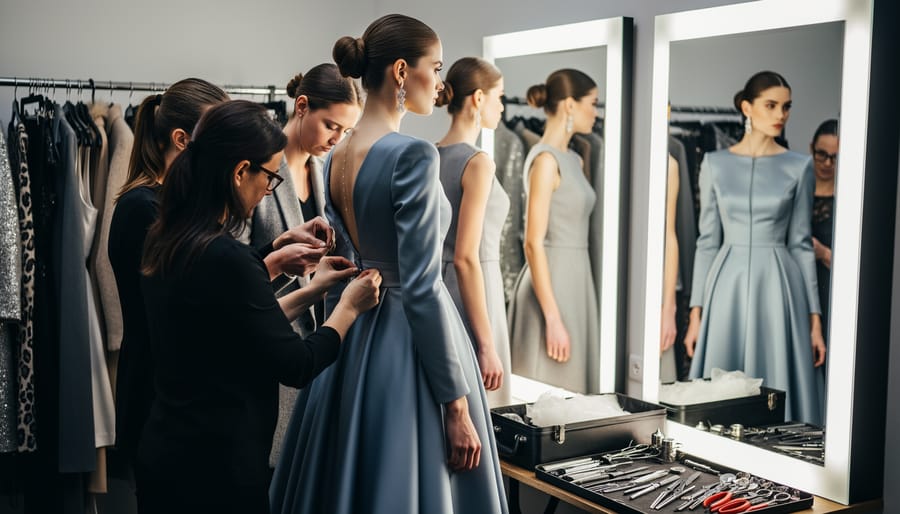
August brings casting calls, model fittings, and finalizing the lineup. Designers decide which pieces make the cut and in what order they’ll appear. By early September, the pressure intensifies. The final week before show day is a blur of last-minute alterations, full dress rehearsals with models, and coordinating every detail of what happens backstage from quick-change logistics to makeup test runs.
Show day itself condenses months of work into a 10-to-15-minute presentation. That seemingly effortless moment when models glide down the runway? It’s the visible tip of a months-long iceberg of planning, problem-solving, and collaboration across continents.
Multicultural Perspectives Backstage
Walk into any NYFW backstage area thirty minutes before a show and you’ll witness a carefully orchestrated ecosystem of global talent. Makeup artists trained in Seoul and Paris huddle over face charts, translating a designer’s mood board into technique. Brazilian hairstylists confer with Nigerian stylists about texture approaches that honor the natural hair of models from six continents. This intersection of perspectives isn’t incidental, it’s what allows collections to resonate across markets and cultures.
The collaboration starts weeks earlier during pre-production calls, where teams discuss how to adapt runway looks for diverse skin tones and hair textures without defaulting to a single beauty standard. A makeup artist from Mumbai might suggest a different base formulation for deeper complexions, while a hairstylist from Tokyo brings expertise in sleek structures that work across hair types. These conversations shape what you eventually see on the runway far more than most audiences realize.
Understanding what models do during this backstage choreography reveals another layer of multicultural exchange. Models often serve as informal consultants, particularly when designers are working outside their own cultural references. A model might explain why a particular draping technique reads differently on their body type, or how a styling choice carries unintended meaning in their home country. These micro-adjustments, informed by lived experience from Lagos to Manila to Mexico City, elevate collections from visually striking to culturally intelligent.
Production crews filming backstage content and managing show logistics add another dimension of global expertise, linguists coordinating international press, tech specialists trained across different fashion capitals, dressers who’ve worked everywhere from London to Mumbai. The models backstage tips shared between these professionals create an informal knowledge network that transcends any single show or season.
How to Experience NYFW 2026: Access Options Explained
Experiencing New York Fashion Week depends largely on who you are in the fashion ecosystem. True backstage access, the kind where you’re in the dressing room during fittings or watching models line up moments before they walk, is reserved almost exclusively for working professionals: the designer’s team, production crew, hair and makeup artists, photographers on assignment, and select press with established relationships. It’s not a ticketed experience you can buy your way into.
That said, there are legitimate ways to engage with NYFW 2026 at different levels. Industry credentials go to buyers, established media, stylists, and brand partners who apply months in advance through official channels or designer PR teams. These aren’t handed out casually. Designer invitations work similarly, brands invite clients, collaborators, celebrities, and influencers whose presence serves a strategic purpose for the collection launch.
| Access Type | Who Typically Gets It | What’s Included |
|---|---|---|
| Industry Credentials | Buyers, established press, stylists with agency backing | Front-row or standing-room show access, some presentation invites |
| Designer Invitations | Brand clients, collaborators, select influencers, celebrities | Reserved seating, occasional pre-show or after-party access |
| Public Showcases | General fashion enthusiasts | Ticketed events like The Bureau (Gotham Hall, Sept 11-13) or Runway 7 (Sony Hall) |
| Digital Streaming | Anyone with internet access | Live runway streams, behind-the-scenes content via designers’ channels |
For enthusiasts without industry connections, public showcases offer the most realistic path. Events like The Bureau at Gotham Hall (September 11-13) and Runway 7 at Sony Hall feature emerging designers and curated presentations where tickets are actually available for purchase. These aren’t the marquee runway shows you’ll see in Vogue coverage, but they’re genuine NYFW experiences.
The most democratic option remains digital. Most major designers now livestream their shows, and many share rehearsal footage, model casting sessions, and production snapshots on social media throughout the week. This shift toward accessibility in fashion content means you can follow the creative process in real time from anywhere, even if you’re not physically in New York. The gap between “being there” and following along has narrowed considerably, especially for those more interested in the clothes and creative choices than the social scene.
What Makes a Show Memorable: Production Insights
A runway show becomes unforgettable when every production element works in concert to amplify the designer’s vision. For the Spring-Summer 2027 collections debuting this September, lighting, sound, staging and casting aren’t decorative afterthoughts, they’re narrative tools that deepen the reinterpretation story each designer is telling.
Lighting design transforms how we read clothing. A show reimagining 1990s minimalism might use stark, cold spotlights that recall the clinical runway presentations of that era, then gradually warm the temperature as modern elements appear. Designers working with heritage textiles often request lighting that reveals texture, side-angled beams that catch weave patterns or embroidery invisible under flat front lighting. The technical crew programs these transitions down to the second, synchronized with each model’s exit.
Music curation carries equal weight. A collection reinterpreting couture craftsmanship through streetwear might open with classical strings before layering in bass-heavy beats, the collision mirroring the clothes themselves. Sound designers work months in advance, building custom tracks or licensing specific recordings that match the collection’s emotional arc. Volume, tempo shifts and silence all communicate meaning before a single garment registers.
Set construction frames the narrative physically. Runway extensions that place models among the audience break the traditional fashion hierarchy, particularly effective for designers democratizing exclusive silhouettes. Mirrored floors double the visual impact of dramatic hemlines. Minimal sets keep focus on reinterpreted details, while elaborate environments, archival photos projected on screens, reconstructed heritage brand storefronts, provide historical context without a single spoken word.
Casting choices complete the message. A diverse lineup of ages, body types and cultural backgrounds signals that these reinterpretations belong to everyone, not just the original era’s narrow ideal. When every element aligns, the show transcends spectacle and becomes genuine communication.
Your NYFW Questions Answered
Can you attend New York Fashion Week if you’re not industry? The short answer is that most runway shows during September 10-15, 2026 are invitation-only events for buyers, press, and industry professionals. However, public-access options do exist. Ticketed events at venues like Gotham Hall (September 11-13) and Sony Hall offer general admission to curated presentations, and designer showrooms occasionally open to fashion students or community members. The key is managing expectations: attending Fashion Week doesn’t necessarily mean front-row seats at marquee shows, but rather engaging with the creative energy through accessible channels.
Can anyone attend NYFW shows?
Most of the 70 official runway shows require industry credentials or designer invitations, but ticketed public events and presentations offer accessible entry points for enthusiasts.
What’s the difference between runway shows and presentations?
Runway shows feature models walking a catwalk in timed sequence with production elements like music and lighting, while presentations allow attendees to view collections on stationary models or displays at their own pace.
How can I follow along if I’m not in NYC?
Most major shows livestream on designers’ social channels, fashion publications cover real-time updates, and platforms like Vogue Runway archive looks from each collection within hours of the show.
What should I know about NYFW Bridal?
NYFW Bridal runs separately October 13-15, 2026, focusing exclusively on wedding gown collections for the following year’s bridal market.
Understanding the Spring-Summer 2027 season designation helps decode what you’re seeing. Collections shown in September 2026 are designed for retail availability roughly six months later, aligning with our clothing seasons guide approach to fashion calendar cycles. Designers select which collections to show based on production capacity, brand positioning, and buyer interest, not every label shows every season, and presentation format often reflects budget and creative vision rather than prestige.